
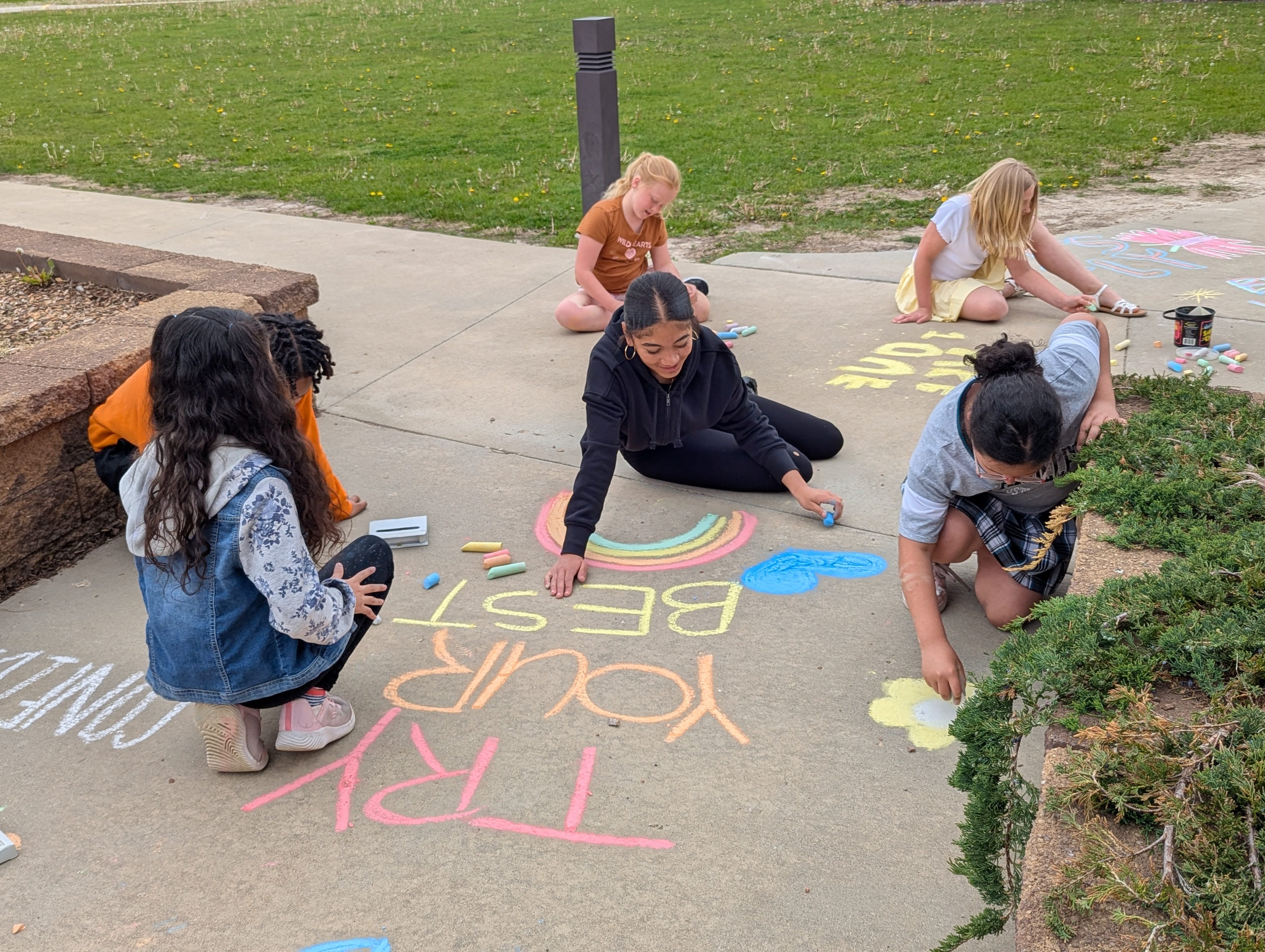
Every October, schools get a flood of awareness-week toolkits. A poster for the hallway. A slide deck for advisory. A themed spirit day. None of that is bad. But if you've spent any time in a school building, you already know something the toolkits can't capture: Kids don't experience mental health as a topic. They experience it as a place.
They feel it in how the hallway sounds at 7:50 a.m. They feel it in whether an adult notices when they walk in with their hood up. They feel it in what happens after a hard moment in class: whether they get sent out, or pulled in.
That's why we've started saying it plainly: mental health isn't a unit. It's the climate of the building.
The number that should change how we plan
In the CDC's most recent national survey of high school students, 4 in 10 said they had persistent feelings of sadness or hopelessness. Four in ten. In a class of 25, that's ten kids.
The same body of research points to something hopeful. When young people feel connected at school, when they believe the adults and peers around them care about them, they're better protected against poor mental health and a whole list of other risks.
Connection isn't a program you buy. It's a condition you build. And it gets built (or broken) in hundreds of small moments a day.
What a stressed brain actually needs
One of the first things GRiT students learn is a simple map of their own brain. We keep the language plain on purpose.
There's a part of your brain that works like a smoke alarm. Its job is to scan for danger, and it's fast. There's another part up front that works like a CEO. It plans, focuses, weighs options and makes good calls.
Here's the key: when the smoke alarm goes off, the CEO goes offline.
That single idea changes how a room full of adults responds to kids. The student who shuts down during a test, the one who snaps at a friend, the one who won't make eye contact: none of them are choosing chaos. Their alarm is going off, and nobody has taught them how to bring the CEO back online.
So we teach them. And, just as important, we teach the adults first. Kids borrow calm from the grown-ups around them. A teacher who can name their own alarm is a teacher who can help a student name theirs.
Three climate moves any school can make this week
You don't need a new curriculum to start shifting climate this week. Here are three moves we see work in real buildings.
- Swap "what's wrong?" for a better question. "What's wrong?" puts a stressed kid on defense. Try "On a scale of 1 to 10, where's your energy?" or "What would make the next hour 10% easier?" Numbers and small steps are easier to answer than feelings.
- Give adults a tool before you give kids one. Pick one regulation strategy, even just naming the alarm and taking one slow breath, and have staff practice it on themselves for a week. Then model it out loud in class.
- Look at how students are doing now, not in July. Most schools learn how their students felt this year from a survey report that arrives after the year is over. By then, the kids who needed someone are already gone for the summer. Real-time check-ins let counselors and deans follow up the same day.
How GRiT builds climate on purpose
GRiT is a neuroscience-based social-emotional learning and leadership curriculum, organized around a climb: Basecamp, four camps, and the Summit. Every student has a summit in view, and every stage gives them a tool for the terrain: understanding their brain, regulating stress, building relationships, and following through on the goals that matter to them.
Because it's built on relational intelligence, GRiT doesn't live in one period. Tools like the Hope Meter and the Peace Index give students language they use across the day, and Compass, our student platform, captures check-in data the moment a student hits submit, so the adults who can help see it while it still matters.
The results show up where schools feel them most. GRiT partner schools have reported 59% fewer disciplinary interventions and a 3% increase in attendance. Fewer trips to the office. More time learning. More kids who feel like the building is on their side.
This week, and every week
Awareness weeks matter. They start conversations that too many families and schools still find hard to have. But the real test comes on an ordinary Tuesday in February, when a kid walks in with their hood up and an adult either notices or doesn't.
That's the climate. And climate can be built.
If you're a school or district leader, we'd love to show you what GRiT looks like in a real classroom, including sample lessons and live Compass data. Book a walkthrough at rewirededu.com.
If you're a teacher, counselor or parent, try one of the three moves above this week, and tell us how it went. We read every reply.
Want this in your school?
See how GRiT and Compass work together, in real time.
→ Book a discovery call